
You get discharged from the hospital with a stack of paperwork and maybe a vague recommendation to "look into a walker." And then you are on your own, scrolling through hundreds of products online, unsure what half of them even do.This guide is here to change that. Whether you are setting up a home rehabilitation space in Dubai, Abu Dhabi, Sharjah, or anywhere else in the UAE, we will walk you through the main types of equipment, who each one is best for, and how to make smart decisions without overspending or under equipping.
Why Home Rehabilitation Is Growing in the UAE
Home-based rehabilitation is not just a global trend — it is becoming a central part of healthcare planning right here in the UAE. And the numbers tell a clear story.
Key figures: The UAE home healthcare market is projected to grow from USD 1.18 billion in 2025 to USD 2.19 billion by 2031. Rehabilitation therapy alone already accounts for nearly 38% of that market — the single largest segment.
Several factors are driving this shift. The UAE introduced compulsory national health insurance in January 2025, making healthcare access more widespread. Early hospital discharge policies are becoming more common, which means patients are transitioning to home care sooner. And frankly, most people simply recover better in a familiar environment, surrounded by family, eating their own food, sleeping in their own bed.
There is also a practical reality: the UAE has one of the highest diabetes prevalence rates in the world at 16.3%, and cardiovascular disease remains the leading cause of mortality. These chronic conditions often lead to mobility challenges and rehabilitation needs that extend well beyond a hospital stay.
The good news? The rehabilitation equipment available today is better, more affordable, and more accessible than ever before. Let us look at what is out there.
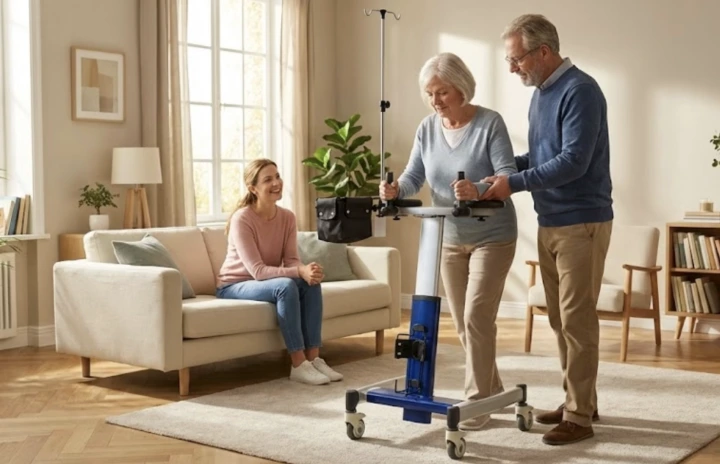
Mobility Aids: Walkers, Rollators & Wheelchairs
Mobility aids are usually the first piece of rehabilitation equipment families look into, and for good reason. Whether the goal is recovering from hip surgery, managing a neurological condition, or simply maintaining independence as balance changes with age, the right mobility aid provides a foundation for everything else.
Walking Aids (Canes, Walkers, Rollators)
A single-point cane works well for someone who needs light balance support — think of it as a confidence booster for people who can walk but feel unsteady. A quad cane (with four feet at the base) offers more stability for those with moderate balance issues.
Standard walkers — the ones without wheels that you lift and place — provide maximum support but are slower. They are best for indoor use during early-stage recovery. Rollators, which are walkers with wheels, brakes, and usually a seat, are better for people who can walk for longer distances but need the option to stop and rest. Most rollators fold up easily for transport.
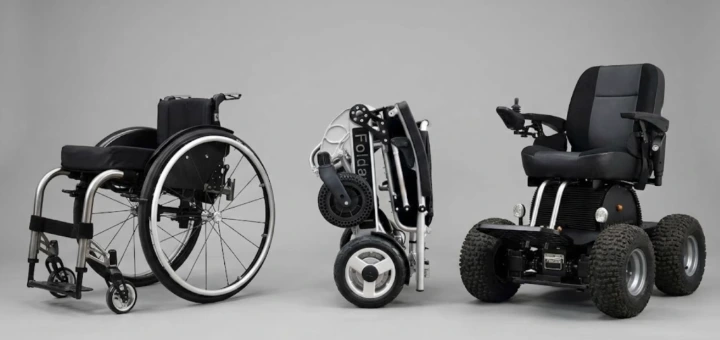
Wheelchairs: Manual, Power & Specialized
When walking is not possible or is too exhausting for daily use, a wheelchair becomes essential. The choice between manual and power depends on the user’s upper body strength, how far they need to travel, and their living environment.
Foldable power wheelchairs have become particularly popular for home use in the UAE because they combine motorized convenience with compact storage — many fold down small enough to fit in a car trunk. For users who need to navigate both indoor and outdoor environments, all-terrain power wheelchairs handle the varied surfaces you often find in UAE neighborhoods, from smooth mall floors to rougher outdoor pathways.
Hospital Beds & Positioning Equipment
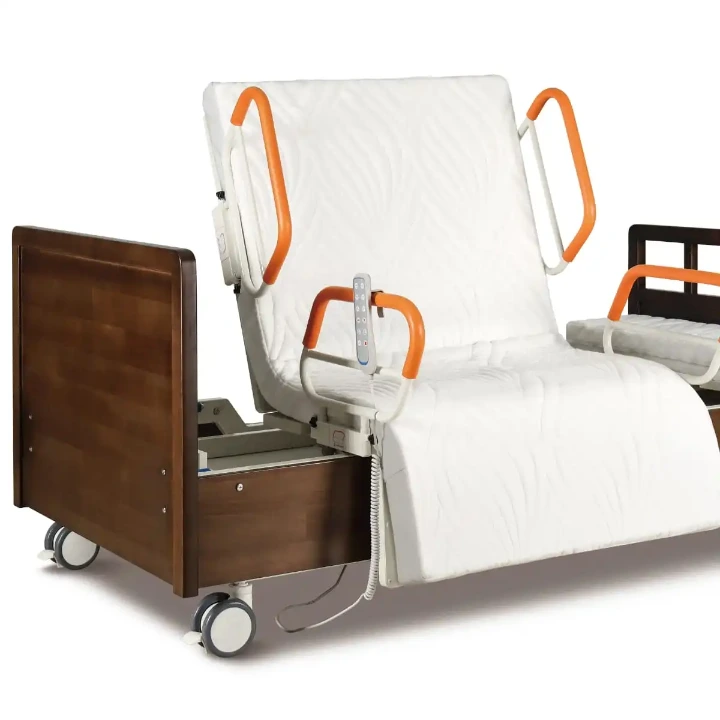
If someone is spending significant time in bed — whether during post-surgical recovery, managing a chronic illness, or dealing with limited mobility — a proper adjustable hospital bed is not a luxury. It is a necessity that prevents a cascade of secondary problems.
A multifunctional hospital bed typically allows you to adjust the head, foot, and overall height independently. This matters for several reasons: it helps prevent pressure sores (a serious risk for anyone bedridden for extended periods), makes it easier for caregivers to assist with transfers and hygiene, and allows the patient to sit up for eating, reading, or simply engaging with family — which has a genuine impact on mental health during recovery.
Look for beds with side rails for safety, lockable wheels so the bed stays in place, and a mattress designed for pressure redistribution. Air-alternating mattresses are particularly valuable for patients who cannot reposition themselves frequently.
In the UAE, you can buy or rent hospital beds from medical equipment suppliers. Renting can be a smart option if the need is temporary — say, for a 3-month post-surgical recovery — while purchasing makes more sense for long-term conditions.
Stair Climbers: Moving Between Floors Safely
This is one of the most overlooked pieces of home rehabilitation equipment, yet for many UAE families living in villas or multi-story apartments, it is a game-changer.
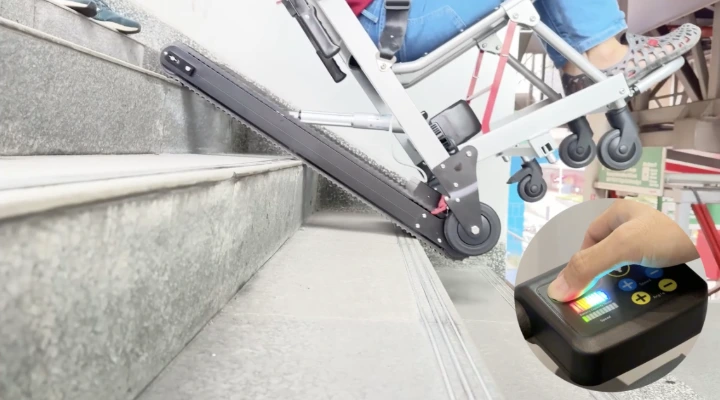
A stair climber (sometimes called a stair climbing wheelchair) is a device that safely transports a person up and down stairs. It looks similar to a wheelchair and is operated by a caregiver or attendant. The device uses motorized treads or wheels to grip each step, carrying the user smoothly between floors.
Before stair climbers, families often faced two options: either confine the person to a single floor (which is isolating and limiting) or undertake expensive home renovations to install an elevator or stairlift. A portable stair climber avoids both of those extremes. It can be used immediately, requires no construction, and travels with the user if they visit other buildings.
When choosing a stair climber, pay attention to the weight capacity, stair angle compatibility (some struggle with very steep or narrow staircases), and battery life. Also check whether it can be used on both straight and curved staircases — not all models can handle curves.
Standing Frames & Standing Wheelchairs
Spending all day in a seated position takes a toll on the body. Reduced circulation, bone density loss, pressure sores, digestive issues, and respiratory problems are all well-documented consequences of prolonged sitting. That is where standing frames and standing wheelchairs come in.
A standing frame is a stationary device that supports a person in an upright position. They are commonly used in physiotherapy and can also be used at home as part of a daily standing routine. Even 30 to 60 minutes of supported standing per day can improve circulation, strengthen bones, and benefit the urinary and digestive systems.
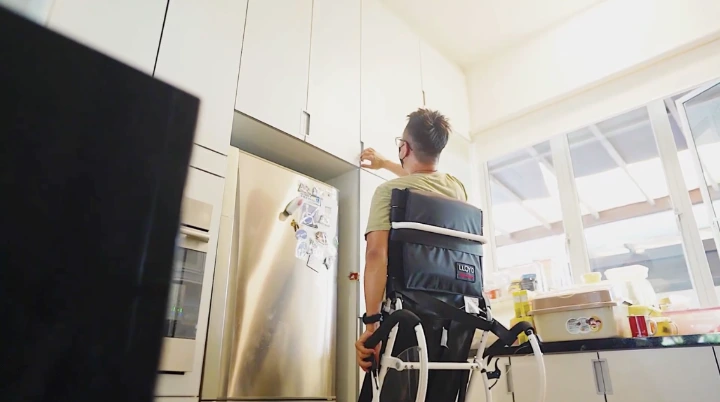
Standing wheelchairs take this a step further by allowing the user to transition from sitting to standing while remaining in their wheelchair. This means they can stand up to reach kitchen countertops, have eye-level conversations, access shelves, and participate in activities that seated users are normally excluded from. The psychological benefit of simply being at the same height as the people around you is something that is hard to overstate.
Standing wheelchairs are particularly valuable for people with spinal cord injuries, multiple sclerosis, and other conditions that limit lower-body function but where the medical benefits of standing are significant.
Bathroom Safety Equipment
The bathroom is the most dangerous room in the house for anyone with mobility challenges. Wet floors, tight spaces, hard surfaces, and the need to transition between sitting and standing make it a high-risk environment. Falls in the bathroom are one of the leading causes of injury in elderly adults.
Essential bathroom safety equipment includes:
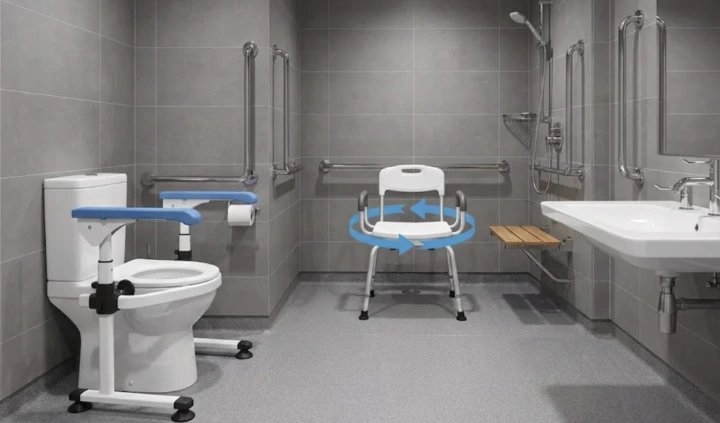
- Grab bars: Installed near the toilet and inside the shower or bathtub. Choose stainless steel bars rated for the user’s weight and make sure they are anchored into wall studs, not just drywall.
- Shower chairs or benches: Allow the user to bathe while seated. Look for models with non-slip feet, drainage holes, and armrests for extra support.
- Raised toilet seats: Adding 3 to 5 inches of height reduces the effort needed to sit down and stand up. Some models come with integrated armrests.
- Non-slip mats: Both inside the shower and on the bathroom floor. This is the simplest and cheapest modification, yet it prevents a remarkable number of falls.
- Handheld shower heads: Allow bathing while seated without needing to move under a fixed shower head.
These modifications are relatively inexpensive and can usually be installed in a single afternoon. They are strongly recommended even for people who are not currently experiencing mobility issues but who are over 65 or recovering from any lower-body procedure.
Exercise & Physiotherapy Equipment
Rehabilitation is not just about having the right mobility device — it is also about actively working to rebuild strength, range of motion, and coordination. Whether someone is recovering from a stroke, surgery, or an extended period of immobility, consistent exercise is what drives real progress.
Here is the equipment that physiotherapists most commonly recommend for home use:
- Resistance bands: Lightweight, portable, and available in different resistance levels. They are used for strengthening exercises for arms, legs, and core. A therapist can design a simple daily routine using just 2-3 bands.
- Pedal exercisers: Small, portable devices that sit on the floor and allow the user to pedal while seated in a chair or wheelchair. They help maintain leg circulation and muscle tone without requiring the user to stand or transfer.
- Exercise balls (physio balls): Excellent for core stability, posture improvement, and gentle stretching. They come in various sizes and are one of the most versatile pieces of rehab equipment you can own.
- Foam rollers: Used for muscle release, flexibility, and pain management. Especially helpful for people with back pain or muscle tightness from prolonged sitting.
- Parallel bars (home version): Freestanding bars that provide support for walking practice. They are commonly used in stroke and spinal cord injury rehabilitation for gait training at home.
- Hand therapy tools: Grip strengtheners, therapy putty, and finger exercisers help rebuild fine motor skills — particularly important after stroke, where hand function is often significantly affected.
Pro tip: Consistency beats intensity. Research on neuroplasticity — the brain’s ability to rewire itself — shows that daily repetition of exercises, even at low intensity, produces better outcomes than occasional intense sessions. If you are doing stroke rehabilitation at home, aim for at least some structured exercise every single day.
Smart Rehab Technology: What Is New in 2026
The rehabilitation industry is in the middle of a technological shift that is making home-based recovery more effective than ever. Here is what is emerging:
AI-powered therapy monitoring is one of the fastest-growing areas, with over 25% of new rehabilitation product development now focused on intelligent monitoring systems. These devices use sensors and software to track a patient’s movement patterns, count exercise repetitions, and even alert caregivers if something looks abnormal — like a sudden change in gait that might indicate an increased fall risk.
Wearable rehabilitation devices are gaining traction rapidly. Over 35% of physical therapy providers in developed economies have started using smart rehabilitation wearables that track joint angles, muscle activity, and progress over time. For patients, this means their therapist can monitor their home exercise compliance and progress remotely — without requiring an in-person visit every time.
Tele-rehabilitation — conducting physiotherapy sessions over video call — became normalized during and after the COVID pandemic, and it is here to stay. Several UAE-based providers now offer structured tele-rehab programs where a physiotherapist guides the patient through exercises in real time from their home. This is particularly valuable for patients in areas of the UAE with limited access to rehabilitation centers.
Robot-assisted rehabilitation devices, while still expensive and mostly found in clinical settings, are beginning to enter the home market. Exoskeleton-style devices that assist with walking are becoming lighter, more affordable, and more practical for daily home use.
How to Set Up a Home Rehabilitation Space
You do not need a dedicated room or expensive renovations. Here is a practical approach:
- Choose a ground-floor room (or the most accessible floor) with good lighting and ventilation. The living room works fine if space is limited.
- Clear a 3×3 meter open area for exercises. Remove loose rugs and tripping hazards. Ensure the floor is non-slip.
- Position the hospital bed (if needed) with at least 1 meter of clearance on the side where transfers happen.
- Install grab bars at key transition points — bathroom, hallway, and next to the bed.
- Create a storage spot for exercise equipment so it stays organized and accessible, not buried in a closet.
- Set up a simple schedule posted on the wall — what exercises to do, when, and for how long. Visual reminders make consistency much easier.
- Consider the caregiver’s needs too. A comfortable chair nearby, good lighting for reading instructions, and enough space to assist with transfers without straining their own back.
Tips for Choosing the Right Equipment
Before you buy anything, keep these principles in mind:
Start with a professional assessment. If possible, consult with a physiotherapist or occupational therapist before purchasing equipment. They can evaluate the patient’s specific needs and recommend exactly what will help — and equally important, what is not needed. This prevents overspending on equipment that ends up unused in a corner.
Try before you buy. For high-ticket items like power wheelchairs and standing wheelchairs, a test ride makes an enormous difference. What looks perfect on a website might not suit the user’s body type, home layout, or daily routine. This is why showroom visits and test drives matter — you simply cannot get this information from a product description.
Think about the full daily routine. Do not just focus on mobility. Think through a full day: waking up, transferring out of bed, using the bathroom, getting to the kitchen, exercising, going outside, and coming back. Each transition might require a different piece of equipment or a simple modification.
Prioritize quality over price on items that bear weight. This applies to wheelchairs, beds, stair climbers, and anything the patient physically relies on for support. A budget wheelchair that breaks down after six months is not a saving — it is a risk. Look for products with solid warranties.
Consider rental for short-term needs. If the equipment is needed for a temporary recovery period (3-6 months after surgery, for example), renting can be significantly more cost-effective than buying. Several UAE-based suppliers offer flexible rental terms.
Plan for changing needs. Recovery is not linear. Someone who starts with a full power wheelchair might progress to a walker, then to a cane. Buy modular or adjustable equipment when possible, and choose suppliers who can help you adapt as needs evolve.
Need Help Choosing the Right Equipment?
Our team at Petra Mobility specializes in matching families with the right rehabilitation and mobility solutions. Visit our Dubai showroom for a free consultation and test ride — or take our quick quiz to get a personalized recommendation.
About Petra Mobility: Based in Umm Ramool, Dubai, Petra Mobility provides premium mobility solutions including power wheelchairs, standing wheelchairs, scooters, rehabilitation equipment, and power add-ons. All products come with up to 5 years of warranty and free test rides at our showroom.
+971 55 908 2499 · Monday–Saturday, 9:00 AM – 6:00 PM
